If you are planning any roofing work in Miami-Dade, the permit question will come up before you even pick a contractor. Skipping it is one of the most costly mistakes property owners make in South Florida. This guide walks through what the county requires, when you need a permit, how to get one, and what the inspection process looks like.
Roofing Permits in Miami-Dade vs Anywhere Else
Miami-Dade County sits inside what Florida officially calls the High Velocity Hurricane Zone, or HVHZ. This designation covers Miami-Dade and Broward counties and applies the most demanding wind resistance standards in the entire United States. Every roofing material, fastener, adhesive, and underlayment used in this zone must meet Miami-Dade’s Notice of Acceptance, known as the NOA, before it can be legally installed on any structure.
That is not a suggestion. It is the law under the Florida Building Code, and the permit process is how the county verifies that every roofing job in Miami-Dade roofing projects meets those standards. When a hurricane rolls through, a roof installed without permits and proper inspections is a roof that may fail, and a failed roof often means a denied insurance claim on top of the physical damage.
When Do You Need a Miami-Dade Roofing Permit
Most property owners assume permits only apply to full replacements. That is not how Miami-Dade roofing project codes work.
Work That Always Requires a Permit
- Full roof replacement on any residential or commercial property
- Re-roofing over an existing layer
- Structural repairs to the roof decking or framing
- Installation of a new roofing system on an addition or new construction
- Replacement of 25 percent or more of the total roof area within a 12-month period
Minor Work That Generally Does Not Require a Permit
- Replacing a small number of damaged shingles without touching the deck
- Resealing flashing that is still structurally intact
- Minor patching on flat roofs covering a small isolated area
If you are not sure which category your project falls into, the Miami-Dade Building Department recommends confirming with a licensed contractor before starting any work. Getting this wrong in either direction costs money.
Miami-Dade’s High Velocity Hurricane Zone Product Rules
This is the part that separates Miami-Dade roofing from almost every other market in the country. The county runs its own product approval system on top of the Florida Building Code. Every roofing product, from shingles to underlayment to adhesive, must carry a Miami-Dade NOA before a contractor can legally install it.
The Miami-Dade Building Department issues the NOA after the product passes testing for wind uplift, water resistance, and impact performance. You will find the NOA number on the product packaging or in the contractor’s submittal documents.
For commercial properties specifically, this matters at the specification stage. A property manager who purchases materials directly without checking the NOA first can delay a project by weeks when the inspector flags non-approved products during the permit review. The contractor you hire should know which products carry active NOA approval and submit that documentation as part of the permit application.
Also Red: How to Avoid Roofing Scams in Miami
How to Apply for a Miami-Dade Roofing Permit
The permit application process in Miami-Dade goes through the county’s Miami-Dade Permitting and Inspection Center. Most licensed contractors handle the application on behalf of the property owner, which is the standard process for both residential and commercial projects.
Here is what the process looks like from start to finish:
- Contractor submits the permit application online through the county’s ePlan portal, including the scope of work, product specifications, and NOA documentation
- Plan review takes place, during which the county checks the submitted documents against the Florida Building Code and HVHZ requirements
- A permit is issued once the review is approved and the permit fee is paid
- Work begins after the permit is posted at the job site or is accessible for roof inspection
- Inspections are scheduled at specific stages of the project
For straightforward residential re-roofing jobs, the review process can take anywhere from a few days to two weeks, depending on the current county workload. Commercial projects with more complex scopes or structural components take longer.
What Inspections Happen After the Permit Is Pulled
This is where the permit process earns its value. Miami-Dade roofing contractors require multiple inspections during a roofing project, not just a final sign-off.
Deck Inspection
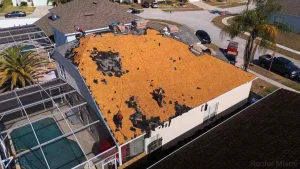
The inspector examines the roof deck before any new material goes down. This confirms the decking is structurally sound and identifies any rotted or damaged sections that need replacement before the new roof is installed. Skipping this step is the reason many roofs fail years earlier than they should. Hidden deck damage left under a new roof layer leads to mold, structural weakness, and premature failure.
Dry-In Inspection
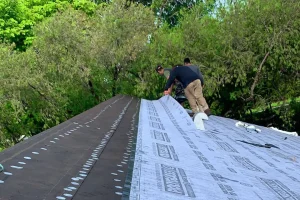
Once the underlayment is installed, the county inspector returns to verify that the water barrier meets NOA requirements and covers the deck correctly. This layer is the roof’s secondary defense against water infiltration if the surface layer is ever compromised during a storm.
Final Inspection
After all roofing materials are installed, the final inspection confirms that the entire system, from decking to the finished surface, meets the HVHZ standard. A passed final inspection results in a closed permit, which becomes part of the property record.
For commercial roofing projects, additional inspections may apply depending on the roof type, such as TPO membrane systems or standing seam metal roofs, each of which has its own inspection checkpoints under the Florida Building Code.
How Much Does a Miami-Dade Roofing Permit Cost
Permit fees in Miami-Dade are calculated based on the total value of the construction work. The county uses a fee schedule tied to the declared value of the project, with additional flat fees for plan review and inspection services.
As a general reference:
- A permit for a residential re-roofing project valued at $10,000 to $20,000 runs approximately $200 to $600 in permit fees (Note: Permit fees mentioned here are estimates only. Actual costs vary by city, county, project scope, and current local rates. Always confirm with your local building department before budgeting. )
- Larger commercial projects with higher declared values carry proportionally higher fees
- Re-inspection fees apply if a project fails an inspection and requires a follow-up visit
These costs are a small portion of any roofing project budget. The consequences of skipping the permit, covered below, cost significantly more.
What Happens If You Skip the Miami-Dade Roofing Permit
This comes up more often than it should, and the outcomes are consistently bad for property owners.
Double permit fees: Miami-Dade Building Code Compliance requires a double permit fee for any work that started without a permit and is later brought into compliance.
Stop work orders: An inspector who finds active unpermitted roofing work can issue a stop work order on the spot, halting the project until permits are pulled and reviewed.
Insurance claim denials: If a roof installed without permits sustains storm damage, your insurance carrier has grounds to deny the claim. This is not a technicality they overlook. In Miami-Dade, where hurricane claims run into the billions annually, insurers review permit history closely.
Resale complications: When you sell a property in Miami-Dade, the buyer’s inspection and title process will surface any open or unpermitted work. A roof without a closed permit creates a title issue that can delay or kill a sale entirely.
Structural risk: Without inspections, there is no independent verification that the roofing system meets HVHZ standards. In a hurricane, that gap in quality control becomes a physical risk to the building and everyone inside it.
Commercial Roofing Permits in Miami-Dade: What Is Different
Commercial property owners face a more involved permit process than residential ones, and the stakes are higher on both the compliance and liability side.
Commercial roofing projects in Miami-Dade require engineered drawings for most roof system types. A licensed structural engineer or architect must sign and seal the drawings before they go to the county for review. The plan review period for commercial projects is longer, and the inspection schedule is more detailed.
For property managers handling portfolios of commercial buildings, this means roofing projects need to be planned with realistic lead times. Assuming a commercial re-roofing can be permitted in a week and completed the following week is a scheduling mistake that creates real problems, especially when a storm season is approaching.
Residential roofing permits move faster through the process by comparison, but the HVHZ product requirements apply equally to both.
Work With a Licensed Roofing Contractor in Miami Who Knows the Process
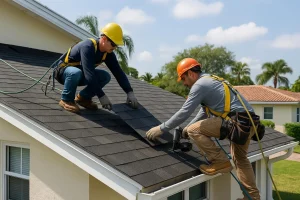
The Miami-Dade roofing permit process is not something to figure out as you go. A licensed contractor who operates regularly in Miami-Dade already knows which products carry active NOA approval, how to submit the permit application correctly the first time, and how to schedule inspections so the project does not sit waiting between stages.
Fix Up Roofing and Construction is the best roofing company in Miami, and can handle the entire permit process as part of every roofing project, residential or commercial. We carry license CGC1531787 and have worked across Miami-Dade County for years.
If your roof needs attention and you want the job done right from permit to final inspection, contact us today for a free estimate. A roof that passes every inspection is a roof that holds up when Miami’s weather tests it.