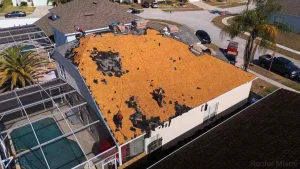
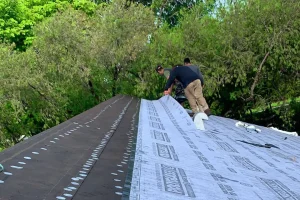
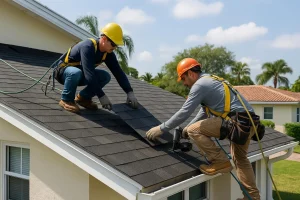
Miami’s hot sun all year, heavy summer rains, salt air from the ocean, and hurricane season every fall combine to test every shingle, tile, and seam on your home. A lot of homeowners believe their roof is fine until a leak shows up on the ceiling or a storm rips off a section. The truth is, most of the damage comes from the same small mistakes that get repeated across the city. As a Miami roofer team that has been on every kind of roof in Miami-Dade for years, we want to walk you through the mistakes we see the most so you can stop them before they cost you a full roof replacement.
Mistake 1: Skipping the Annual Roof Inspection
The biggest mistake in Miami is the one we see most often. Homeowners wait until water drips through the ceiling to call a roofer, and by that point, the damage has already spread to the wood deck, insulation, and drywall.
Florida roofs lose about 1 to 2 percent of their life every year just from sun and heat, and that number doubles after a major storm passes. A roof inspection takes a couple of hours and catches small problems while they still cost a hundred dollars to fix instead of a few thousand.
You should book an inspection:
- Once every year, even when nothing looks wrong
- After every named storm or tropical system that passes through Miami-Dade
- Before listing your home for sale
- Before buying any home over 10 years old
- When you notice any stain on the ceiling, no matter how small
Mistake 2: Hiring an Unlicensed Roofer in Miami
This one breaks the wallet faster than any storm. Miami-Dade County is part of the High-Velocity Hurricane Zone, which has the strictest roof codes in the country. The Miami-Dade Building Code Compliance Office sets product approval rules that apply to every shingle, tile, screw, and underlayment.
An unlicensed contractor will skip permits, use products that have no Miami-Dade NOA approval, and leave your insurance company a clear reason to deny any future claim. Hiring a licensed roofing company in Miami matters because:
- The work passes county inspection on the first try
- Your homeowner’s insurance honors the claim if the roof fails
- The labor and material warranty stays valid
- You avoid open code violations that block the future sale of your home
Ask for the license number, look it up on the Florida DBPR website, and walk away from anyone who hesitates.
Mistake 3: Ignoring Small Leaks Until They Grow
A coffee-cup-sized water stain on the ceiling does not mean a small problem on the roof. By the time water reaches the drywall, it has already passed through the shingles, the underlayment, the wood deck, and the attic insulation. The leak on the roof is often three or four feet away from the stain inside, because water travels along beams before it drops.
Small leaks lead to:
- Black mold growing in the attic within 48 hours
- Rotting roof trusses that need carpentry repair
- Soaked insulation that no longer keeps the house cool
- Higher AC bills as the cool air escaping through the wet spots
- Drywall and paint repairs across the whole ceiling
A quick patch by a trained Miami roofer in the first week of a leak costs far less than a full attic restoration in month three.
Mistake 4: Using the Wrong Roof Material for Miami Weather
Miami is not Atlanta, Phoenix, or Chicago. The mix of heat, humidity, salt air, and hurricane wind needs materials made for this climate. Some homeowners pick the cheapest option at the supply store, and the roof fails within five years.
Common Wrong Choices
- Basic three-tab asphalt shingles in coastal zones, which lift off in 80 mph winds
- Standard metal panels without proper coating that rust from salt air in two seasons
- Clay tiles set without proper foam or screws that slide off in heavy wind
- Light underlayment that melts and cracks under the Miami summer sun
The right choices for residential roofing contractors in Miami include architectural shingles rated for 130 mph wind, aluminum or galvalume metal panels with marine-grade coating, concrete tiles fixed with screws and adhesive, and synthetic underlayment with high heat tolerance.
Mistake 5: Skipping the Permit Step
Every full roof replacement and most large repairs in Miami-Dade County need a permit. Some homeowners agree to skip the permit when the contractor offers a lower price for cash, and that single choice can cost them tens of thousands later.
Unpermitted roof work leads to:
- Failed home sale inspections, where buyers walk away
- Insurance claim denial when the next hurricane hits
- Fines from the county code enforcement team
- A forced re-do at the owner’s full cost when the work gets caught
- No legal protection if the contractor disappears
A serious roofing company in Miami pulls the permit on every qualifying job and walks the inspector through the final approval. That paper trail protects the home for the next 20 years.
Mistake 6: Poor Attic Ventilation
The attic under your Miami roof can hit 150°F in July. Without proper ventilation, that heat cooks the underside of the shingles, dries out the wood, and shortens the roof’s life by years. Poor ventilation also traps moisture from the humid Miami air, which leads to mold and mildew on the trusses.
Common signs of a ventilation problem:
- Shingle granules in the gutter long before the roof should be aging
- Curled or buckled shingle edges
- Spots of black mold on the attic ceiling boards
- An AC system that runs nonstop in the afternoon
- Energy bills that climb each summer
The fix is a balanced system of ridge vents, soffit vents, and sometimes a powered attic fan. We see this issue on about half the Miami homes built between 1990 and 2010, and the fix pays for itself within a few summers of lower AC bills.
Mistake 7: Cracked or Missing Flashing Around Joints
Flashing is the thin metal that seals the spots where the roof meets a wall, a chimney, a skylight, or a vent pipe. About 80 percent of all roof leaks in Miami come from failed flashing, not from failed shingles or tiles.
Older homes often have rusted galvanized flashing that has worn through. Newer homes sometimes have flashing that the original installer set under the wrong layer, so water slips behind it instead of running over it. A quick visual check from the ground or a drone photo can spot the issue before it leaks.
Read More: What Roofers in Miami Do All Day
Mistake 8: Layering New Shingles Over Old Ones
Some homeowners get talked into a “roof over” job, where new shingles get nailed straight on top of the old layer. The price looks tempting because the contractor skips the tear-off labor.
The problems with this approach:
- The added weight stresses the roof trusses
- Hidden rot under the old layer keeps growing
- Hurricane wind ratings drop because the second layer cannot bond right
- Most home insurance carriers refuse coverage for double-layer roofs
- Florida law restricts this method on many roof types
A proper tear-off costs more upfront, but the new roof lasts the full warranty period and keeps the house insurable.
Mistake 9: Letting Trees and Branches Hang Over the Roof
Miami homes have lush mango, oak, and palm trees, and the green canopy looks beautiful. The trouble starts when branches scrape the shingles, drop leaves into the gutters, and fall during the next tropical storm.
Tree-related roof damage we fix every season includes:
- Punctures from broken branches during summer thunderstorms
- Granule loss from rubbing limbs
- Algae and moss growth in the shade zones
- Clogged gutters that send water under the roof edge
A yearly trim by a tree service keeps every limb at least 10 feet from the roof surface and stops the problem before it starts.
Mistake 10: Patching With the Wrong Sealant
Hardware store roof sealant works fine on a garden shed. In a Miami home, it fails within one summer. The Miami sun bakes off cheap sealants in weeks, and the patch shrinks, cracks, and lets water back in.
Trained roofers use polyurethane sealants, EPDM rubber patches, or peel-and-stick membrane that holds up to UV, heat, and rain. A professional patch on a small leak runs around $200 to $500 and lasts 10 to 15 years. A DIY tube of black goo lasts one storm.
Other Mistakes That Show Up in Many Miami Homes
A few smaller mistakes round out the list:
- Painting over rust stains on a metal roof instead of treating the corrosion
- Power washing tile roofs at high pressure, which strips the protective coating
- Skipping the secondary water barrier required on Florida re-roofs since 2007
- Mounting solar panels without sealing the mount points the right way
- Ignoring small gaps in the soffit, through which wasps and rodents enter the attic
- Resting AC units or heavy equipment on flat roof sections without proper support
Each of these turns into a costly call to a Miami roofer when the next big rain arrives.
Are You Making These Mistakes in Your Home?
A few quick steps protect your home today:
- Take photos of any stain, lifted shingle, or rusted flashing from the ground
- Save your last roofing invoice, warranty paper, and permit record
- Call a licensed roofer for a written inspection report
- Get a clear scope of work and a fixed price before signing anything
- Confirm the contractor pulls the permit and shows you the final inspection sign-off
Stop a Small Roof Problem Before the Next Miami Storm
Roof mistakes hide for months and show up in the worst week of the year, when the rain is heaviest, and the good contractors are booked solid. A quick inspection now, a small repair this month, and a clear plan for the next hurricane season is the cheapest way to keep your Miami home safe and your insurance valid. At Fix Up Roofing, our licensed team handles roof inspections, repairs, replacements, and storm damage work for homes across Miami-Dade and the wider South Florida area. Contact us today, and stop the next leak before it finds your living room ceiling.