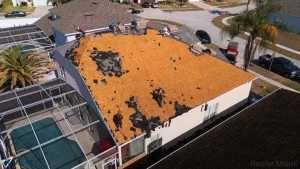
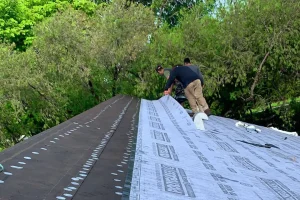
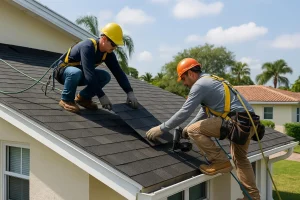
Every property owner in Miami faces this question at some point. The roof is showing problems, and the call has to be made between fixing what is there or pulling it all out and starting fresh. Getting this wrong in either direction costs money. Paying for a replacement when a repair would have held for years is an expensive mistake. Paying for a repair on a roof that needed replacement means paying twice within a short period.
Why This Decision Is Harder in Miami Than Most Cities
Miami’s climate puts roofs under more stress than most markets in the country. The combination of year-round heat, high humidity, heavy rainfall, and hurricane season creates conditions that accelerate roof wear faster than in cities with moderate weather. A roof that might last 25 years in a northern state may show significant deterioration in 15 years in South Florida.
This matters for the repair versus replacement decision because the age and condition of a Miami roof do not follow a standard national timeline. A 12-year-old flat roof on a commercial building in Miami may already be at the point where roof replacement in Miami is the more cost-effective option. The same roof in another climate might have years of service left.
According to the Insurance Institute for Business and Home Safety, roofs in hurricane-prone regions like South Florida face sustained wind, rain, and debris impact that accelerates structural degradation at a rate significantly higher than the national average. For commercial property owners and facility managers, this means the decision between roof repair in Miami and replacement needs to be based on a current inspection, not just the age of the roof.
What Roof Repair Covers and When It Makes Sense
Roof repair in Miami addresses specific damage or deterioration in a section of the roof without disturbing the rest of the system. It is the right call when the overall roof structure is in acceptable condition, and the problem is localized.
Situations Where Repair Is the Right Call
- A section of shingles was damaged in a recent storm, and the rest of the roof is within its service life
- A single leak source has been identified and traced to a specific area, such as flashing, a pipe boot, or a cracked tile
- The roof is under 10 years old and has no widespread pattern of deterioration.
- Granule loss on asphalt shingles is limited to one section rather than distributed across the entire surface
- A flat roof membrane has a puncture or separation at a seam in one area, while the rest of the membrane is intact
For commercial buildings in Miami, targeted repairs after storm events make sense when the roof has passed its last inspection without systemic issues. A roof that took a hit from debris during a storm but was otherwise performing well is a repair candidate. The damage is an event, not a pattern of failure.
The cost of roof repair in Miami for commercial properties typically ranges from a few hundred dollars for minor patching to several thousand for larger section replacements, depending on the roof type, the area affected, and access conditions.
What Roof Replacement Covers and When It Is the Right Call
Roof replacement in Miami removes the existing roofing system and installs a new one from the membrane or underlayment up. It is a structural decision that affects the building’s ability to handle the next ten to twenty years of Miami weather.
Conditions That Point to Replacement
- The roof is past its expected service life for its material type in South Florida conditions
- Multiple leaks have developed in different areas of the roof over a short period
- The decking below the roofing material shows water damage, rot, or structural softening in multiple locations
- After two or more repair cycles within a few years, the problems keep returning
- The roof failed inspection following a hurricane or named storm with damage across the full surface
- The existing system no longer meets current Florida Building Code requirements, which is a common issue for older commercial roofs.
For commercial properties, roof replacement in Miami often becomes the right financial decision when the cost of ongoing repairs across a maintenance period would exceed the cost of a new system. A building manager who has called for repairs three times in four years is likely spending more than a replacement would have cost, with no guarantee of when the next call will come.
The 50% Rule: A Practical Benchmark
One benchmark roofing professionals use to frame the repair versus replacement conversation is the 50% rule. When the cost of repair approaches or exceeds 50% of the cost of a full replacement, replacement is generally the better financial decision. This applies especially to commercial buildings where the repair cost on a large roof can be substantial, even for a relatively contained problem.
For a 20,000 square foot commercial flat roof in Miami, a repair covering 40% of the surface area at a cost of $30,000 may not be the right call if a full replacement of the same roof is $65,000. The repaired sections will perform, but the remaining 60% is still aging. The next repair cycle may arrive within two to three years.
How Miami’s Hurricane Season Affects the Decision
Hurricane season runs from June through November. For property owners making a roof decision in spring, the timing of the work matters as much as the type of work.
Repair Before Hurricane Season
If a roof has localized damage but is otherwise structurally sound, completing roof repair in Miami before hurricane season reduces the risk of an existing weakness becoming a failure point during a storm. A small area of loose flashing or a partially lifted section of membrane is a low risk in calm weather and a high risk in 80-mile-per-hour winds.
Replacement Before Hurricane Season
A roof that is already deteriorated and shows signs of systemic failure is not a candidate for a patch before storm season. A storm that hits a roof in that condition is likely to cause damage well beyond what the existing deterioration already shows. Roof replacement in Miami before hurricane season on a roof that is already past its service life is an investment in avoiding a much higher post-storm cost.
For commercial property owners with buildings in Miami-Dade County, this decision also carries insurance implications. Many insurers in Florida will not renew coverage on roofs over a certain age without an inspection report confirming a serviceable condition. A roof that fails that standard is a replacement candidate regardless of the storm timeline.
Roof Material Types and How They Factor In
The roof material affects both the repair and replacement decision because different materials have different service lives and failure patterns in Miami’s climate.
Flat Roofs on Commercial Buildings
Modified bitumen, TPO, and EPDM membranes on commercial flat roofs are the most common systems in Miami’s commercial building stock. These membranes typically last 15 to 20 years in South Florida conditions with proper maintenance. When a flat roof membrane starts showing widespread crazing, blistering, or membrane separation at multiple points, repair extends the problem rather than resolving it. Replacement is the decision at that stage.
Shingle Roofs on Residential and Mixed-Use Properties
Asphalt shingles in Miami face accelerated UV degradation and granule loss from the constant heat exposure. A shingle roof showing granule loss across the majority of its surface, curling at the edges, or cracking in the tab body is past the repair stage. Localized shingle damage from a storm on an otherwise sound shingle roof is a repair job.
Metal and Tile Roofing
Metal tile roofing has a longer service life than either asphalt shingles or membrane systems in Miami conditions. Metal roofs resist the UV exposure, wind, and moisture that accelerate deterioration in other systems. When metal roof repair is needed, it is usually at flashings, penetrations, or seam points rather than the panels themselves. Full replacement of a metal system is less common and typically triggered by storm damage rather than age-related wear.
The Inspection Is What Decides, Not the Symptom
A visible leak or a damaged section is a symptom. The inspection is what determines the extent of the problem below the surface. Water that enters a roof at one point travels before it shows up as a stain or drip inside the building. The visible damage and the actual damage source are often in different locations.
For commercial properties, a roof inspection before any repair or replacement decision includes:
- Membrane or surface condition assessment across the full roof area
- Infrared scanning to identify moisture trapped in the insulation layer
- Decking condition check at accessible points
- Assessment of drainage systems, gutters, and scuppers
- Review of previous repair history and inspection records
Without this, the repair versus replacement decision is based on incomplete information, and the outcome may not match the expectation.
Get a Roof Assessment Before the Decision Gets Made for You
The right decision between roof repair in Miami and roof replacement in Miami is the one made with a current inspection, an honest assessment of the roof’s condition across its full surface, and a cost comparison that accounts for the building’s remaining service life expectation.
At Fix Up Roofing and Construction, our team works with commercial property owners, building managers, and homeowners across Miami on roof assessments that give a clear picture of the system’s actual condition. Whether the property needs targeted repair, a full replacement, or a staged approach that addresses the most critical areas first, the recommendation follows what the inspection shows. If your roof is showing signs that something is wrong, the cost of waiting for next storm season to confirm it is higher than the cost of finding out now. Contact Fix Up Roofing to schedule an inspection and get a clear answer on what your roof actually needs.